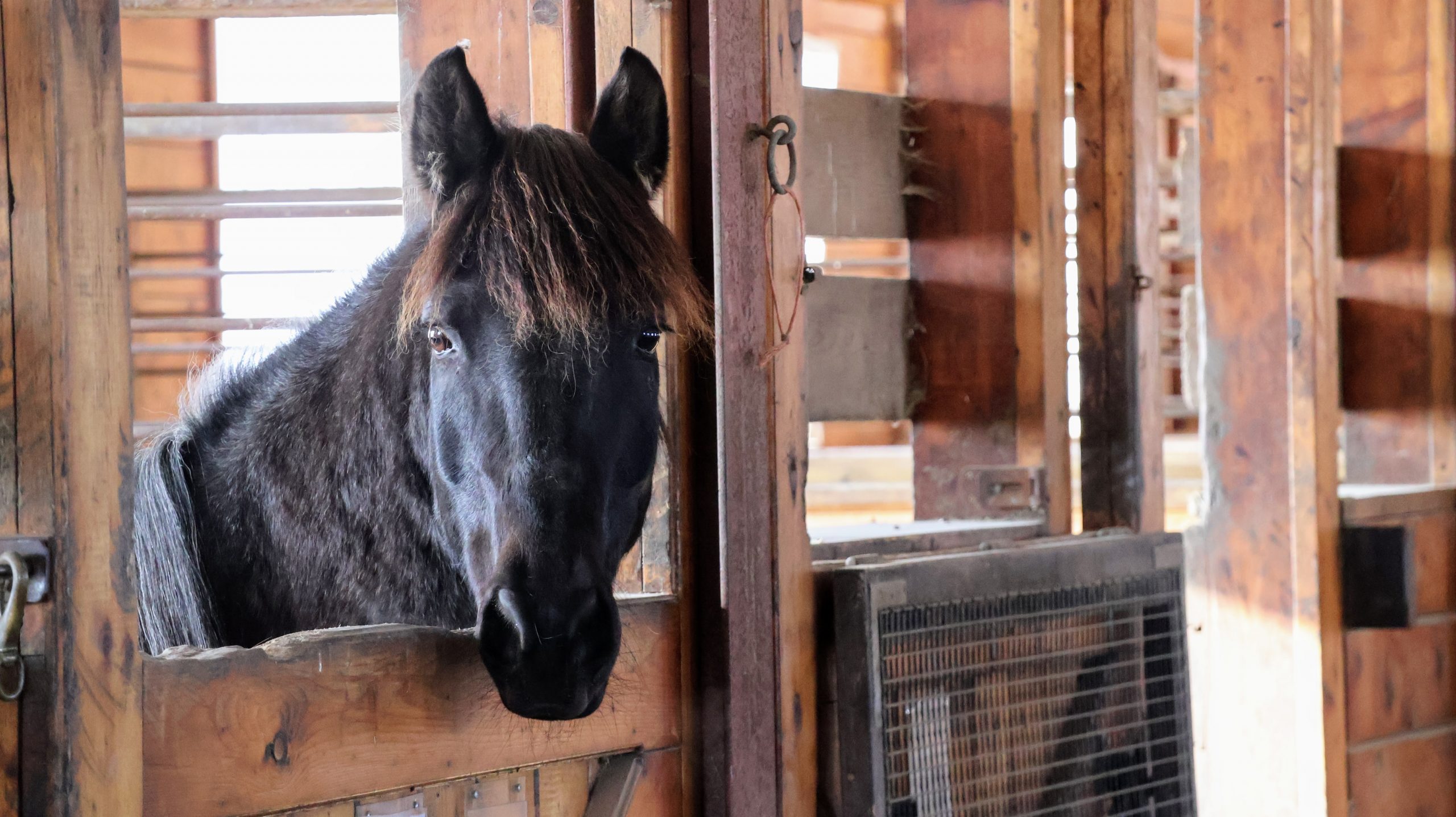
For survivors of domestic violence with horses, leaving abuse isn’t just a decision—it’s a logistical and emotional crisis. How do you bring a 1,000-pound companion to safety?
In the summer of 2022, Peg Keyser, Advancement Director of the Maine State Society for the Protection of Animals (MSSPA), attended our day-long Don’t Forget the Pets Workshop hosted in Augusta, Maine. These workshops are often attended by staff members and advocates from domestic violence shelters, homeless shelters, and animal welfare organizations—but it is not often that someone joins us whose primary shelter residents are horses.
“The MSSPA’s mission is to protect the health and welfare of abused and neglected equines. Horses come to the farm that have either been seized by state or municipal law enforcement or surrendered to law enforcement. The MSSPA was created in 1872, to serve as a retirement facility for the horses that pulled the trolleys in Portland, Maine.” explained Peg.
The MSSPA recently introduced a new program, appropriately named “Safe Shelter”, which offers respite care to horses owned by domestic violence survivors fleeing abusive situations. “This program was borne with the understanding that keeping owners with their pets aided not only in their leaving but in their healing”. The foundation of this program is twofold: the construction of a newly built paddock with higher-than-normal fencing and protective screening, and the creation of a “Safe Shelter Care and Feed Fund”. This fund covers the expenses of caring for a horse, ensuring that these stays come at no cost to owners who are in the process of healing and seeking stability after domestic violence.
Many people understand the impact that household pets have on the healing process. 97% of survivors say that keeping their pets with them is an important factor in deciding whether to seek shelter from abuse. 50% of survivors report that they would not consider shelter at all if they could not bring their pet. The owner–equine relationship is equally important, but often overlooked. Bonds formed with horses can be deep, therapeutic, and identity-forming.
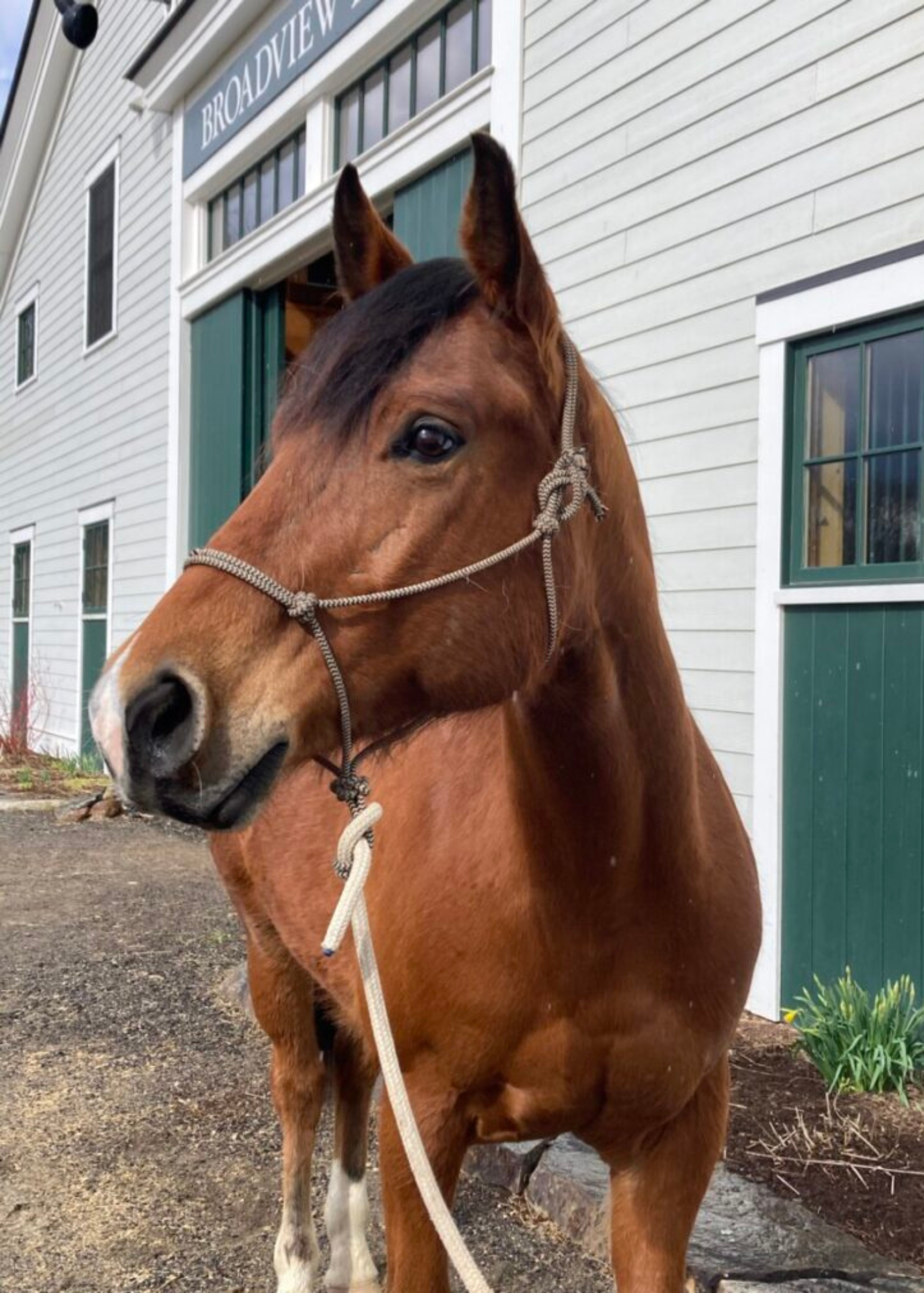
Photo by MSSPA
Programs like this are especially critical because, unlike many companion animals, horses require land, specialized care, and complex transportation. These barriers create an even larger gap in access to services for horse owners experiencing domestic violence.
When I asked Peg what the MSSPA’s “lightbulb moment” was in creating this program, she said, “Our CEO at the time thought – perhaps there was a way that the MSSPA could be involved to offer respite services to horses. That was the summer of 2022! And so began this journey…We know the need for this type of service exists, however – at least in Maine – we only have anecdotal data. It made so much sense that we could make this happen; we already offer superlative care to the horses here at the farm, why not create this program to offer this same type of care to these DV horses?”
The MSSPA welcomed its first horse from a domestic violence survivor in early February. Although the organization was not fully prepared to launch the service, a domestic violence shelter reached out in urgent need of placement, and MSSPA acted immediately. “He is an older guy, so of course we were worried a bit about how he would handle the whole event, trailering, coming to a new place. He has been a complete rockstar! He loaded right up, after some tearful goodbyes from this owner, and traveled about an hour and 40 minutes to the farm. He was immediately placed in a beautiful new stall with a run-in shed and a huge paddock, solo at first as he is in quarantine, but in sight of other horses.” explains Peg.
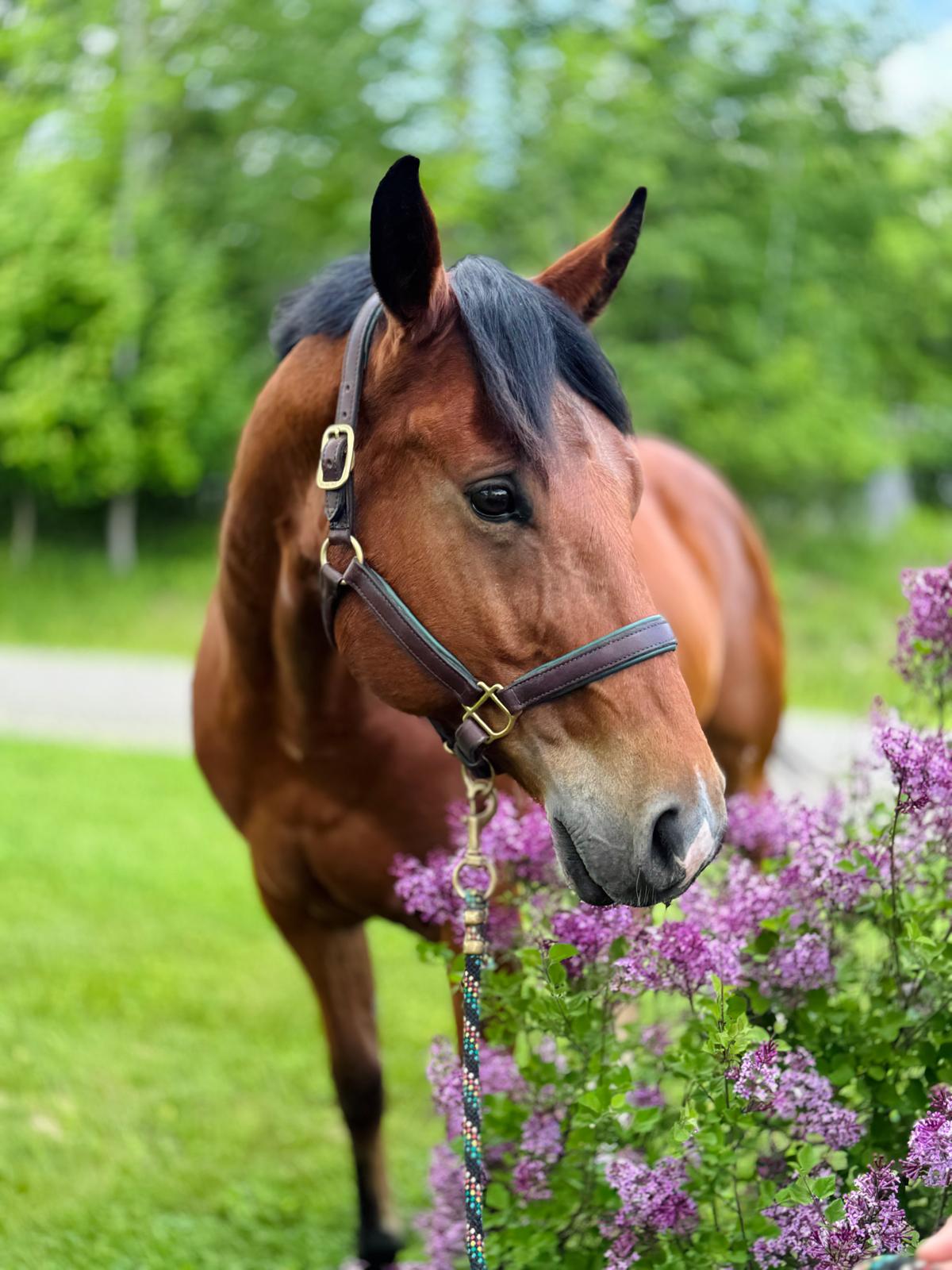
Photo by MSSPA
“Our staff and volunteers not only care for the horses, but love them deeply.”
Staff members regularly take photos and videos to share with the horse’s owner, who calls frequently to check in while working toward stability so she can be reunited with her beloved companion. The new arrival has even formed a friendship with Gibson, another horse boarded at the facility. What began as standing near each other across fence lines and eating hay together eventually led to the two sharing a paddock. “Our staff and volunteers not only care for the horses, but love them deeply, and everyone has been so attentive to him because we want his time here to be so positive and safe for him”.
On behalf of the Don’t Forget the Pets team, and our respective organizations, Greater Good Charities and RedRover, we are honored to support the creation of programs like this. We are here to assist any organization interested in offering similar services to their community through grant funding, individualized program development, and design assistance.
When I asked Peg what it means to her to provide a safe space for these horses, she said, “ I have worked so hard on bringing this program to life, because I believe it is a segment of the population that the MSSPA can help without doing too much differently than we already do! If housing a horse here means a survivor, a family might be able to begin a new life, how can we possibly convey how amazing that would be.”
Thank you to Peg Keyser for sharing your thoughts on this journey to accommodating horses of domestic violence survivors, and to the Maine State Society for the Protection of Animals for the courageous work you are doing—helping both horses and their owners heal during times of trauma and crisis.
Gabbie Vilanova is an Assistant Program Manager for Greater Good Charities. With a B.S. in Animal Science, she uses her expertise to help construct pet-friendly spaces at shelters throughout the country.